The Quiet Discipline of Sleep: A Global Look at Rest, Mattresses, and the Craft of Good Sleep
An editorial exploration of how sleep works, what makes a mattress truly supportive, and how our environments shape the hours we spend in the dark.
Sleep is one of the oldest technologies we inhabit. It is both biological necessity and cultural performance, a daily ritual that refuses to be fully explained even as it governs every other activity. In an era of rapid sleep research, the simple act of lying down becomes a doorway into circadian rhythms, neural housekeeping, and the quiet drama of how we choose comfort. The domain name NashuaMattress, a blend of a place and a product, gestures toward a local intimacy with sleep. Yet the deeper story, the one that travels beyond borders and brands, is the universal hunt for rest that feels earned, restorative, and reliable.
What does it mean to write about sleep in a way that is both precise and generous? It means turning away from sensational claims and toward a thoughtful synthesis of science, craft, and daily practice. It means asking not only which mattress is best for you, but which questions you should ask when you encounter a mattress—questions about materials, structure, breathability, and durability. It means recognizing that sleep health is not a single product but a constellation of factors: light exposure, room temperature, soundscapes, posture, and the cadence of your evening routine.
Within this article, we will trace several threads. First is the science of sleep architecture—the stages that knit together a night’s worth of healing and memory consolidation. Second is a careful, non-promotional look at mattresses as engineered surfaces meant to support spinal alignment, pressure distribution, and temperature regulation. Third, we will consider how a sleep-focused site can be both informative and responsible—citing credible sources, avoiding hype, and presenting a taxonomy that helps readers navigate a crowded marketplace without surrendering pride in critical thinking.
Sleep as Architecture: How the Night Tells a Story
The human brain is a grand architect, and sleep is its blueprint. In the deepest stages of non-REM sleep, the brain processes information gathered during the day, pruning neural connections in a way scientists increasingly describe as housekeeping. REM sleep, the vivid, dream-filled phase, is where many researchers locate memory integration and emotional regulation. The distribution of these stages across a night—often described as sleep architecture—can be influenced by age, genetics, stress, caffeine intake, and, crucially, the environment in which we rest.
Physiology does not operate in a vacuum. Light exposure sets the timing of our internal clocks, or circadian rhythms, with morning light advancing wakefulness and evening darkness gently guiding the body toward sleep. Temperature fluctuations, roughly a one to two-degree drop, appear to support the onset of sleep and the maintenance of deeper stages. Mattress design, though it seems procedural and mundane, participates in this biological choreography by shaping comfort, pressure distribution, and fatigue on pressure points, thereby influencing sleep continuity and perceived restfulness.
To think clearly about sleep is to accept nuance. A mattress is not a universal solvent for all sleep problems. Rather, it is a tool—one of many—that can support but not guarantee restorative sleep. The aim is a sustainable equilibrium: a bed surface that aligns with your posture, breath, and preferences for temperature and motion isolation, while you attend to the other pillars of sleep health—darkness, quiet, routine, and nourishment.
Mattress Education Without Salesmanship: How to Understand, Not Promote
In an informational space, education must stand apart from promotion. A credible primer on mattresses begins with construction: the core materials (memory foam, latex, polyfoam), the layering architecture (comfort layers, transition foams, and support cores), and the importance of edge support and temperature regulation. The reader deserves an honest map: how different foams respond to heat, how latex breathes, and why a denser core can promote long-term durability without sacrificing contouring properties.
Consider the idea of firmness not as a single metric but as a spectrum that interacts with body weight, sleeping position, and heat dissipation. A mattress marketed as “firm” may feel differently to a lighter sleeper than to someone who bears more mass. Likewise, a “soft” mattress may still provide robust support if its comfort layers are arranged to distribute pressure evenly. The educational challenge is to translate these abstractions into practical guidance: what to test in a showroom, what questions to ask, and how to interpret sleep trials, returns policies, and certifications around materials.
To this end, a responsible sleep portal would offer core pillars: how mattresses work, how to evaluate materials for durability and safety, how to interpret consumer reviews with a critical eye, and how to construct a sleep environment that complements the bed you choose. It would present a glossary of terms (support, firmness scale, contouring, breathability, loft, and resilience) and then extend into actionable content: how to measure sleep quality at home, how to adjust room conditions, and how to cultivate a pre-sleep routine that downstream benefits the body’s natural rhythms.
A Non-Local, Informational Approach: The Value of Neutral Sleep Knowledge
The future of a sleep-focused site, especially one that aims for broad reach and enduring relevance, lies in neutrality. The most impactful articles are those that connect physiology, ergonomics, and daily life without reducing sleep to a product category. By embracing a research-forward posture—summarizing peer-reviewed findings, citing credible authorities, and offering clear explanations—we allow readers to develop their own criteria for what constitutes a good night’s rest.
In this mode, a content strategy can center around pillars such as Sleep Basics, Mattress Education, Sleep Health & Habits, and Tools for Evaluation. Each pillar can host supporting articles that build a lattice of knowledge: a foundational explainer on sleep stages, a non-promotional guide to understanding mattress materials, a myth-busting feature addressing common sleep misconceptions, and practical checklists for optimizing the sleep environment.
The editorial voice becomes a quiet companion rather than a salesperson. It invites readers to interrogate sources, consider individual variation, and adopt a humane pace for experimentation with sleep practices. In a landscape where devices, apps, and advertisements proliferate, such a stance is both rare and necessary. It ensures the site remains useful to students, clinicians, caregivers, lay readers, and anyone curious about the science behind sleep and the craft that surrounds it.
A Practical Guide: Reading the Mattress Landscape Without Bias
Even when the emphasis is non-commercial, readers still deserve practical guidance. Here is a framework for evaluating a mattress in a non-promotional context:
- Understand your sleeping position and weight distribution. If you primarily sleep on your side, you may seek a surface that cushions shoulders and hips without letting the spine sag. If you sleep on your back or stomach, you might prioritize a balance of support and contouring that maintains spinal alignment.
- Evaluate materials for temperature regulation. Memory foam often offers excellent contouring but can trap heat; latex tends to breathe more readily; hybrids attempt a middle ground. Look for ventilation features, open-cell structures, and cover fabrics that promote airflow.
- Assess durability and care. The durability of a mattress depends on the density of foams, the longevity of latex, edge support, and the height of the layers. Honest sources will discuss how to rotate, vacuum, and protect a mattress to extend its life.
- Consider sustainability and safety. Certifications such as GOTS, GOLS, and other independent standards can provide reassurance about material purity and environmental impact. Always verify the credibility of any certification and understand what it covers.
- Interrogate trial periods and warranties. A robust sleep test should be transparent and adequate, with clear return policies and a reasonable warranty that accounts for manufacturing defects and normal wear.
In the end, a mattress is a compromise—an instrument that must harmonize with your body and your life. The best choice is the one that fits into your routine with the least friction, enabling the mind to release the day and the body to settle into restful signaling.
The Downtown Company Case Study: A Case for Refined Everyday Comfort
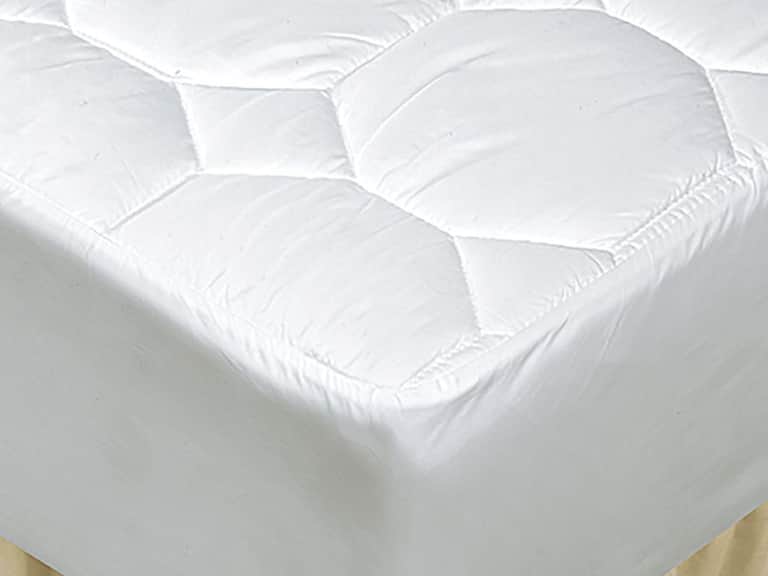
Within a catalog of sleep accessories, a product like the Downtown Company Luxury Cotton Mattress Pad offers a compelling portrait of how thoughtful design translates into daily ease. The pad is described as a refined layer of comfort built from a plush 100% cotton fill and a cotton-blend honeycomb quilted cover. Its distinguishing features—18-inch deep pockets, a flexible jersey-knit skirt, and Austrian manufacture—signal a commitment to compatibility and durability. It is not a flashy product; it is a practical, well-made layer that enhances a bed’s surface without altering the fundamental architecture of the mattress.
For a reader seeking education rather than sales, such a product can serve as a concrete example of how layering works. A mattress pad like this changes perceived softness, supports even pressure distribution, and can contribute to a cooler, more breathable sleeping environment. The emphasis on washability reinforces the idea that sleep health includes hygiene and maintenance as an everyday discipline. It is a reminder that good sleep does not hinge on a single miraculous invention, but on a sequence of small, reliable choices that accumulate over time.
In a broader sense, the pad embodies a philosophy of sleep: that comfort can be achieved through gracefully simple engineering and thoughtful craftsmanship. The Austrian origin underscores a European standard of textile production that values precision and longevity. A reader who appreciates such nuances learns to ask the same questions about other bed components: What is the fabric? How is it constructed? How does it feel after an all-night use cycle? These are not merely consumer concerns; they are inquiries into the architecture of rest itself.
The product narrative thus becomes a teaching tool. It invites readers to translate a specific item into a lens for evaluating sleep surfaces as a whole. If a reader can articulate why a cotton mattress pad matters for temperature regulation, they can begin to translate similar insights to other components—pillow fills, breathable covers, or a mattress’s own surface materials. This is how an informational site earns trust: by connecting concrete examples to universal principles of sleep health.
Product Spotlight: A Thoughtful Intersection of Form and Function
Among the cataloged offerings, a tangible example is the DownTown Company Luxury Cotton Mattress Pad. Its descriptive materials—plush cotton fill, honeycomb quilted cover, and a design that emphasizes breathability and a secure fit—spotlight how a simple addition can meaningfully alter the snowscape of a bed. The text notes the pad’s Austrian manufacturing, signifying a cultural emphasis on meticulous textile craftsmanship. It also emphasizes practical considerations such as machine washing, reinforcing the idea that sleep health must integrate ease of care into its daily ritual.
For readers who crave a deeper, non-promotional understanding, the product serves as a micro-case study of how a layering product contributes to sleep quality. It prompts questions: How does additional padding affect pressure points for different sleepers? Does the pad influence heat dissipation, and if so, how does that interaction manifest across seasons? How does edge-to-edge stability translate into a calmer night when turning is required? These are the questions that turn a shopper’s impulse into a scientifically minded inquiry.
A Taxonomy for the Reader: Clarity in a Crowded Marketplace
To navigate the marketplace without losing sight of sleep’s larger aims, the following taxonomy can anchor a thoughtful reader’s approach:
- Sleep Science: Articles that explain circadian biology, sleep stages, and the interplay between wakefulness and rest.
- Mattress Mechanics: Explanations of how different materials behave, including durability, breathability, and support dynamics.
- Environment and Habits: Guides on lighting, temperature, noise, and pre-sleep routines that optimize the conditions under which a mattress performs.
- Care, Maintenance, and Longevity: Practical advice on rotation, cleaning, and protection, ensuring that sleep hardware remains in good condition over time.
- Myth-Busting and FAQs: Debunking common sleep myths and answering questions readers are likely to encounter in stores or online.
With this framework, a reader can approach the sleep landscape with curiosity and caution. It also creates room for future explorations—perhaps a deeper dive into one material’s lifecycle, or a comparative analysis of heat management strategies across mattress types. The aim is not merely to inform but to empower readers to make decisions aligned with their bodies, routines, and values.