Toward a Quiet Science of Sleep: Bedding, Boundaries, and the Art of Rest
An editorial exploration of sleep physiology, practical bedding education, and the humane discipline of making sleep better—without selling you anything you don’t need to know.
Sleep is not a merely private ritual but a public, almost civic, undertaking: a daily convergence of biology, environment, and habits. In an era saturated with quick fixes and marketing slogans, a thoughtful guide to how sleep works—and how the things we touch each night can influence it—offers a steadier compass. Nashua Mattress, in theme if not in commerce, could be imagined as a hub for clear-eyed sleep education: a place where the science of sleep meets the craft of bedding, not as advertisement but as public knowledge.
This article, written in the spirit of rigorous curiosity, surveys the architecture of sleep, from circadian rhythms to the anatomy of a good night's rest, and then passes through the practical mean: what a mattress pad actually does, how to think about firmness and materials without falling for hype, and why certain details—like a and 18-inch pocket depth—matter in the quiet, essential work of staying asleep.
Sleep, Anatomy, and the Quiet Mathematics of Night
Sleep is not uniform; it unfolds in stages—light sleep, deep sleep, and REM—each with distinct neurophysiological signatures. Our bodies move through this architecture in approximately 90-minute cycles, a rhythm shaped by biology and tuned by daylight. The circadian system, a master clock, responds to light signals; the result is a daily ebb and flow that nudges us toward wakefulness when the sun climbs and toward rest as darkness deepens. Understanding this framework helps explain why certain environments can either cradle or disrupt slumber.
Beyond the brain’s choreography, the physical bed is a stage upon which sleep performs. Temperature regulation, pressure relief, and motion isolation all interact with the stages of sleep. As researchers have shown, modest changes in ambient temperature—around a couple of degrees—can meaningfully influence sleep onset and stage distribution. The bedding we choose—from the sheet’s weave to the mattress pad’s fill—becomes, in effect, a passive co-actor in that performance. This is not merely comfort; it is modular influence on brain activity, heart rate variability, and the body’s repair processes.
Bedding Education: How a Mattress Pad Fits Into Sleep Ecology
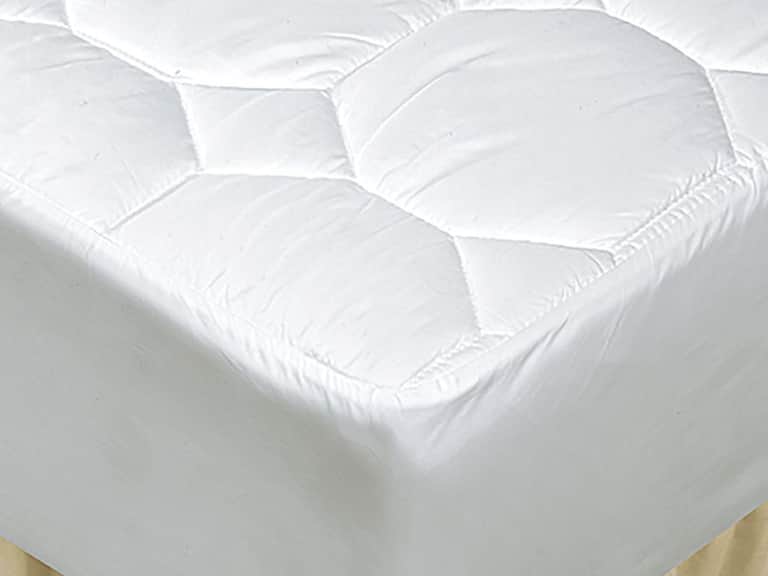
In the language of bed-making, a mattress pad is a modest, almost unsung character. Its job is not to pretend to be something it is not; rather, it adds a layer of controlled softness, a barrier against wear, and a path toward a sleep surface that breathes. A high-quality cotton mattress pad, for instance, can provide a breathable, evenly distributed cushion that protects the mattress without altering the fundamental feel of the bed. The Downtown Company Luxury Cotton Mattress Pad, for example, combines a plush cotton fill with a honeycomb quilted cover and a fit that holds securely with 18-inch deep pockets. It is designed to be washed, to be practical, and to be quietly elegant—a reminder that good sleep is a ritual of thoughtful maintenance just as much as it is a matter of biology.
A well-chosen pad is not a sales pitch. It’s a physics problem solved with fabric science: loft, fill weight, and fabric weave all interact to create a surface that doesn’t trap heat, doesn’t compress into a hard line across the spine, and doesn’t shift in the night. The Austrian craftsmanship behind many of these products—where tradition and modern textiles meet—underlines a broader truth: care in materials often translates into steadiness in sleep. The result is not merely comfort; it is a subtle, persistent stabilizing influence on your rest cycle.
A Guide to Mattress Materials, Without the Marketing Spin
Materials matter, but they matter differently depending on circumstance. Natural fibers tend to regulate moisture and permit airflow, while certain foams are chosen for pressure relief and contouring. Latex offers resilience and breathability, and down alternatives blend loft with softness. Each material has a story, a set of trade-offs, and a care routine that can extend its life. The aim of bedding education is not to declare a “best” but to illuminate the questions you should ask when you consider what sleep means to you—the positions you favor, the climate you inhabit, and the way your body responds to pressure and temperature.
For instance, a mattress pad made with a cotton fill and a breathable jacquard cover can create a cooler, more even sleeping surface, especially when used over a mattress that may run warm or when nights are humid. A pad’s value lies not only in its comfort but in its capacity to preserve the mattress’ integrity and extend its useful life. Conversely, in a very dry climate, a lighter pad can prevent excess heat retention and prevent overheating, which is another path to restful sleep.
Myths, Facts, and the Everyday Sleep Checklist
The culture of sleep is thick with myths: that more expensive means better, that the most supportive firmness will automatically yield perfect posture, or that a single product can fix errant sleep without behavioral changes. The truth is subtler. Sleep health thrives on a constellation of small, consistent actions: a regular bedtime, a dimming of screens as night approaches, a cool room, and a bed that supports a natural spine alignment. Bedding can aid these practices, but it cannot replace them. A robust sleep routine, in tandem with honest education about how the body uses environment and materials, generates the most reliable gains in sleep quality.
In practical terms, debunking myths might involve rethinking how we frame firmness. The idea that “firm is always best for your back” oversimplifies lumbar mechanics; the reality is that support should align with your spinal curvature in a way that feels neutral and unforced. That is rarely the same as a single “preferred” number on a firmness scale. In the end, the best choice is one that aligns with your body’s signals and your sleep posture over time, rather than a snapshot taken in a showroom mood.
A Non-Local, Informational Path: The Sleep Knowledge Portal
If a theme emerges from the reflections above, it is this: a sleep knowledge portal can lift the conversation beyond transactional recommendations. It can offer a structural understanding of why certain practices help—or hinder—rest, while presenting careful, sourced explanations about materials and design decisions. The intent is to cultivate an informed readership that can navigate a marketplace with sharper discernment, choosing products that fit their needs rather than chasing trends.
This editorial direction values credibility, transparency, and accessibility. It invites readers to engage with questions like: How does light exposure shape circadian rhythms? What is the difference between memory foam and latex in terms of cooling and support? How should one interpret mattress pad specifications such as loft, fill weight, and pocket depth? The aim is not to close debates by decree but to widen the circle of knowledgeable readers who can participate in the conversation with confidence.
A Brief Product Note: The Downtown Company Luxury Cotton Mattress Pad
Among the available items in a thoughtful bedding catalog, the Downtown Company Luxury Cotton Mattress Pad stands as a practical exemplar of the principles outlined here. Its combination of a plush cotton fill and a cotton-blend honeycomb quilted cover offers a breathable, lightly cushioned layer. With 18-inch deep pockets and a flexible jersey-knit skirt, it promises a secure fit that remains in place night after night. Made in Austria and fully washable, its design embraces both durability and elegance, a quiet reminder that good sleep often rests on the mundane story of care and maintenance.
If you are seeking to calibrate your sleep environment with a non-commercial, education-forward lens, such a product illustrates how tangible decisions at the bedside can influence nightly comfort without demanding a sales pitch or a grand guarantee. It is the sort of object that makes sleep feel manageable, approachable, and—crucially—worthy of thoughtful attention.
Resource Notes and Editorial Practice
In assembling a range of bedding knowledge, the editorial practice here emphasizes careful sourcing, clear explanations, and an avoidance of invented quotes or fictional interviews. Real, well-documented public figures who speak to sleep science or bedding design—while welcome in broader discourse—are not invoked here to create a sense of authority where none is due. The goal is to cultivate a thoughtful, non-commercial voice that honors readers’ intelligence and curiosity.
Readers are invited to treat sleep education as a long-form inquiry rather than a shopping list. The article’s prime directive is to illuminate, not to upsell; to explain, not to persuade; to enable, not to overwhelm. In that spirit, the content gestures toward a structured site taxonomy and an editorial calendar that can sustain a steady stream of inquiries—Sleep Basics, Mattress Education, Sleep Health & Habits, and Resources—each supported by rigorously cited explanations of physiology, materials, and practical care.
A Suggested Site Structure for Direction B
To realize a neutral, educational Sleep Knowledge Portal, a pragmatic site map might include pillar pages and topic clusters, facilitating readers’ exploration without overwhelming them with product-centric content. Potential pillars include:
- Sleep Basics: Circadian rhythms, sleep stages, and the science of why we sleep.
- Matter of Materials: How different bedding materials influence temperature, moisture, and comfort.
- Mattress Education: How to understand firmness, support, zoning, and durability without vendor bias.
- Sleep Hygiene and Habits: Room environment, routines, and cognitive behaviors that support sleep quality.
- Glossary and Quick References: Terms and charts to demystify sleep science for readers.
This structure invites ongoing content development: explainers on sleep architecture, primers on mattress construction, and practical checklists for readers to apply to their own sleep environments. It also leaves room for occasional product mentions in a neutral, descriptive capacity—like the mattress pad example above—when they serve as concrete illustrations of a concept rather than as promotional content.
Conclusion: The Quiet Power of Informed Rest
Sleep is a daily act of trust—a trust that your body makes, inside a room that you curate with intention. By prioritizing education over advertising, a sleep portal grounded in credible science can become a steady companion in the night. It can empower readers to understand how simple choices—below the surface of a mattress pad’s stitch—translate into better rest, longer attention spans, and improved mood. The goal is not a perfect sleep but a more informed one: a sleep that is robust, humane, and—given enough time—quietly transformative.
If Nashua, or any city for that matter, becomes a touchstone for the idea that sleep knowledge should be accessible and responsible, then the site’s identity will have earned its place. Not as a marketplace, but as a chamber of learning where readers linger, question, and return—year after year, night after night.